
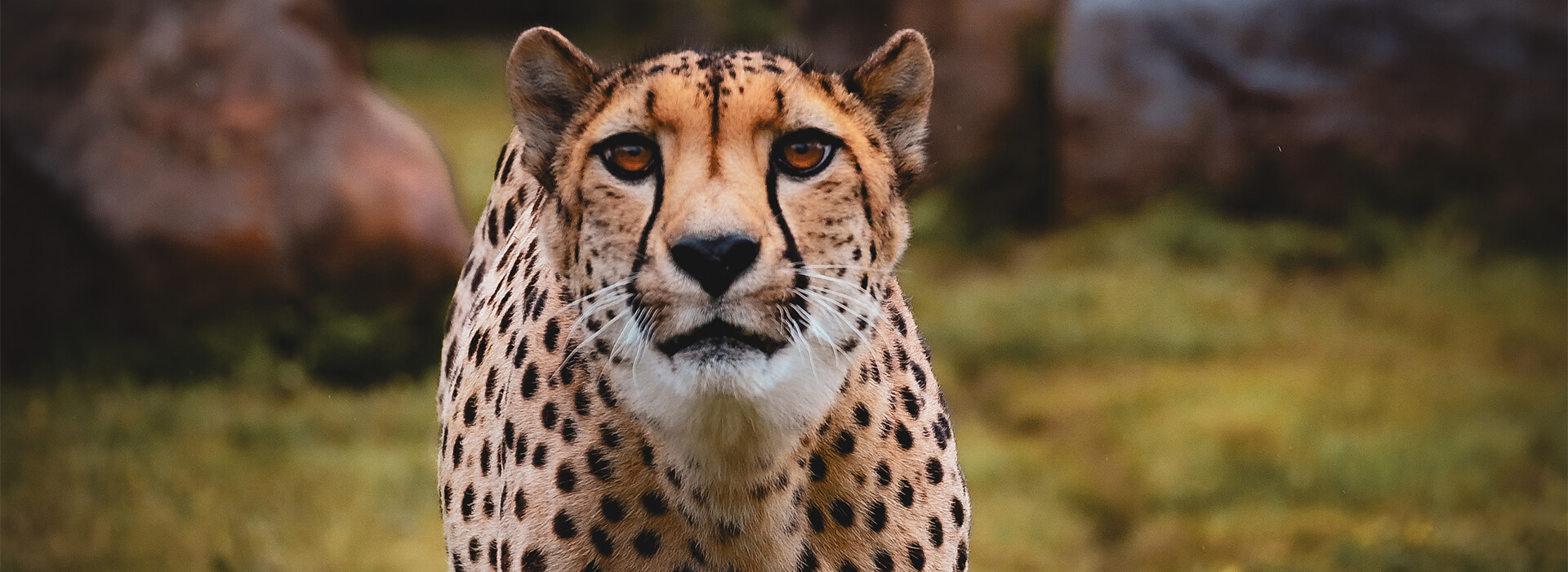
Our carnivore team are responsible for the daily care of the majority of our highly intelligent carnivores and apart from a focus on varying the meat-based diets, similar to what they would eat naturally, the keepers focus on building rapport with the animals and training them to make their care easier. Many of the carnivores are key species involved in our varied up-close encounters.

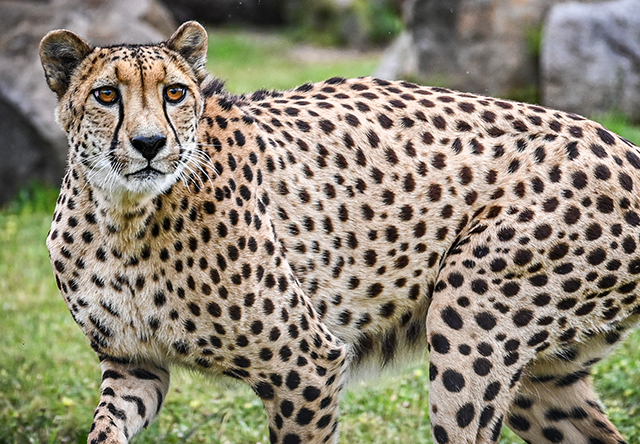

Cheetah
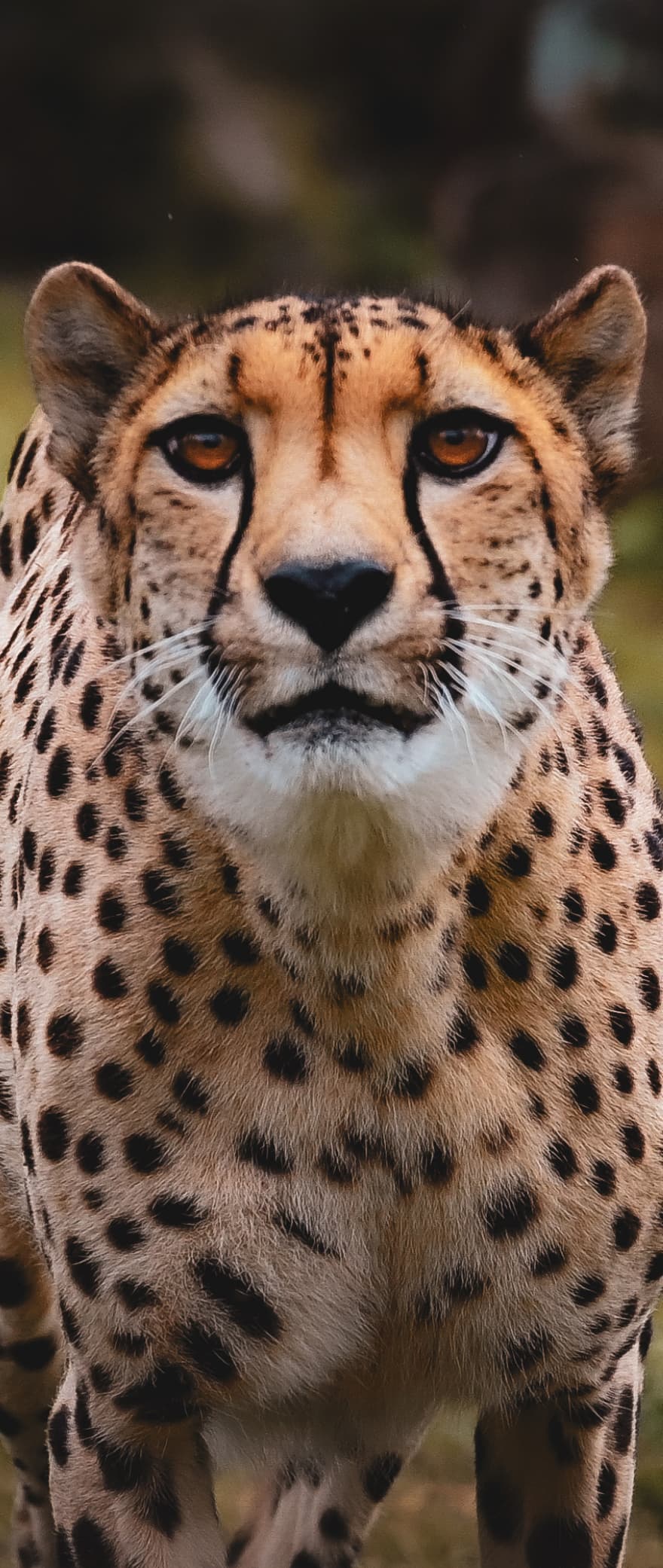
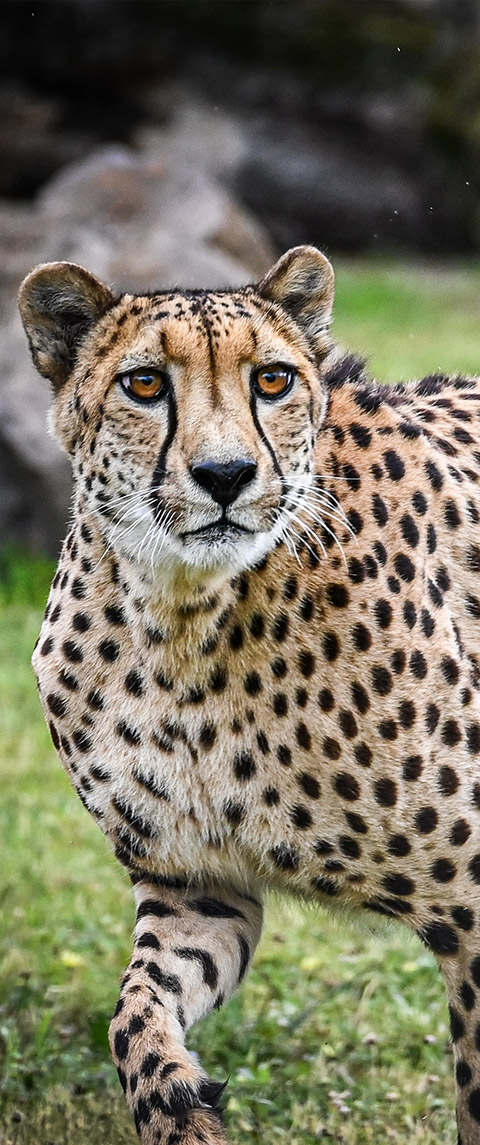
The planet’s fastest land animal is built for super speed, rather than stamina. A cheetah chase usually only lasts a minute and covers about 300 metres. At full speed, cheetah take three strides a second, covering seven metres per stride with the long tail acting as a rudder. A highly flexible spine allows their body to twist and turn with ease even at high speed. Their prey usually consists of smaller antelope and mammals but on occasion they will even catch ostrich. One tenth of their prey is stolen by lions or hyenas so they hunt during the day to reduce this impact. The distinctive black ‘tear marks’ running from its eyes are thought to help reflect the glare of the sun.
Cheetahs communicate in many ways. Some of these are through vocalizations such as purrs, bleats, barks, growls, hisses, and a high-pitched chirping sound. Another way they communicate is through scent marking and males will mark their territory by spraying urine or by cheek and chin rubbing against a tree trunk or bush. In the last 100 years, the world has lost 90% of the wild cheetah population, cheetah are now found in just 9% of their historic range with the global population is estimated at less than 8,000. The Asian cheetah population now numbers just 50 or so animals, in one isolated pocked of Iran. A reintroduction programme was initiated in India in 2022.
Cheetah kill prey daily and on private land this puts in them in conflict with stock farmers. In addition, the loss of open grasslands in Africa to thick bush due to a lack of regular fire has greatly reduced their natural habitat. The key focus is on protecting remaining wild populations through:
- Educating rural communities and farmers.
- Capture and translocation of problem animals.
- Guard dog programmes in which dogs are raised and live amongst livestock and protect them from cheetah and other predators.
Guard dog programmes have extended to several countries and conservation programmes and areas including little blue penguins being protected from cats and foxes in Victoria. Guard dogs are often not accompanied by a shepherd with all responsibility for the flock delegated to the dog. Similarly, donkeys are used to guard cattle calves from leopards.
Our Cheetahs are part of the regional zoological breeding programme. They are also a part of a global studbook held to assist manage the genetics of the global captive population. Zoos globally provide significant funding and resources for cheetah conservation programmes.
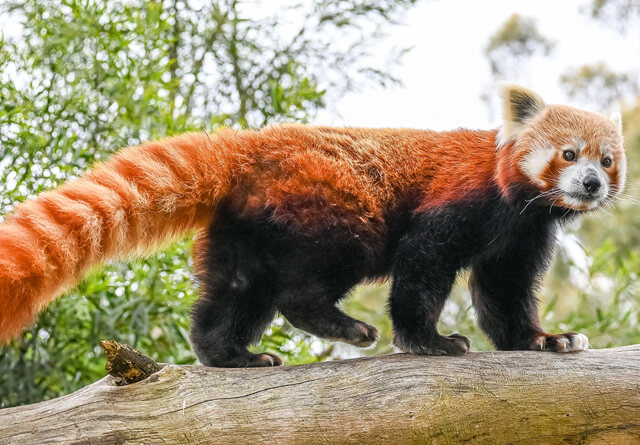
Red Panda
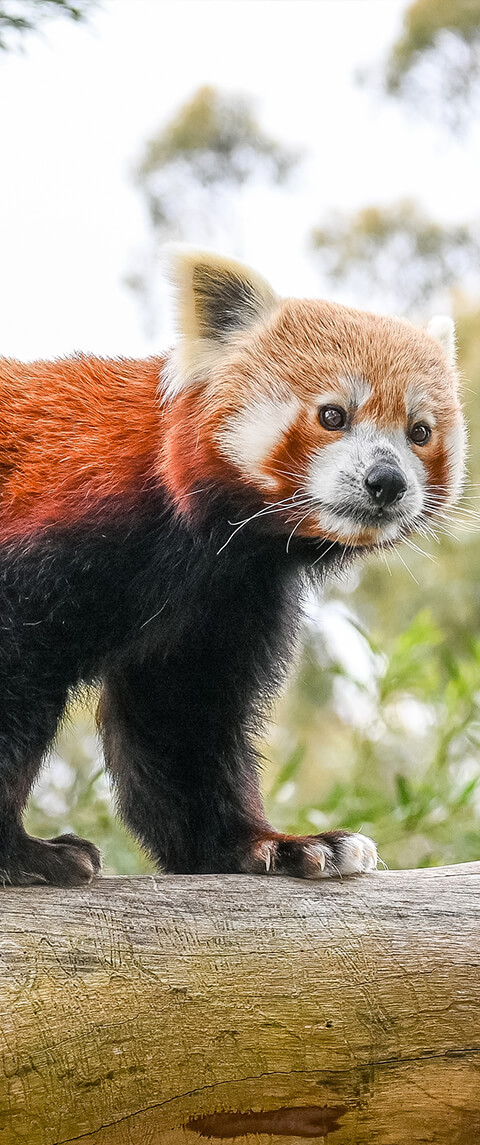
Red pandas, like giant pandas, are bamboo eater’s native to Asia’s high forests. Despite these similarities and their shared name, the two species are not closely related. Red pandas are much smaller than giant pandas and are the only living member of their taxonomic family. Genetic studies show that red pandas are an ancient species amongst the carnivores and are probably most closely related to the group that includes skunks, raccoons and weasels.
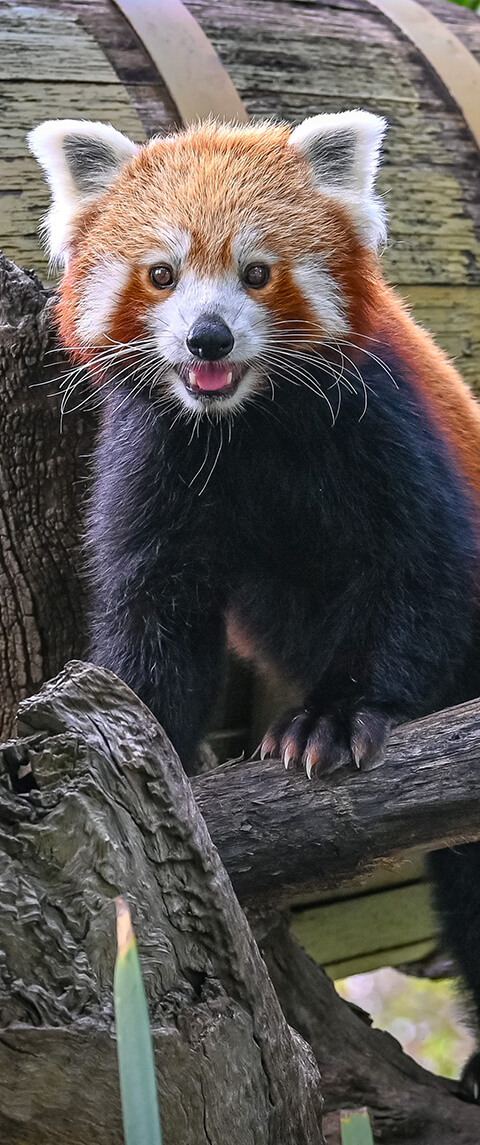
Red pandas can be easily identified by their unique red coat colour, which acts like camouflage within the canopy of fir trees where branches are covered with clumps of reddish-brown moss and white lichens. Red pandas live in high-altitude, temperate forests with bamboo understories in the Himalayas and other high mountains including mountains in Burma and parts of China.
Red Panda populations have decreased by half in recent years, and they are now classified as endangered. Zoos internationally have formed a global species breeding programme for the species and our red pandas belong to this breeding programme. As with many species half of all red pandas born are males but only one individual male is required to breed and ensure their genetics are represented in the global population. To enable this some zoos must agree to hold excess males only and this is the role we play in the breeding programme.
Our red pandas play a valuable role as ambassadors for their species and during the ever-popular encounters our visitors learn a lot more about red pandas and hopefully fall in love with them and wildlife generally.
The Red Panda Network is committed to the conservation of wild red pandas and their habitat through the education and empowerment of local communities in Nepal and are funded by international agencies including the zoo network.
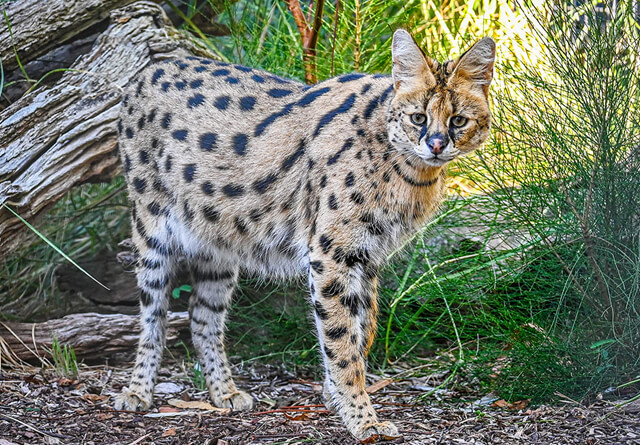
Serval
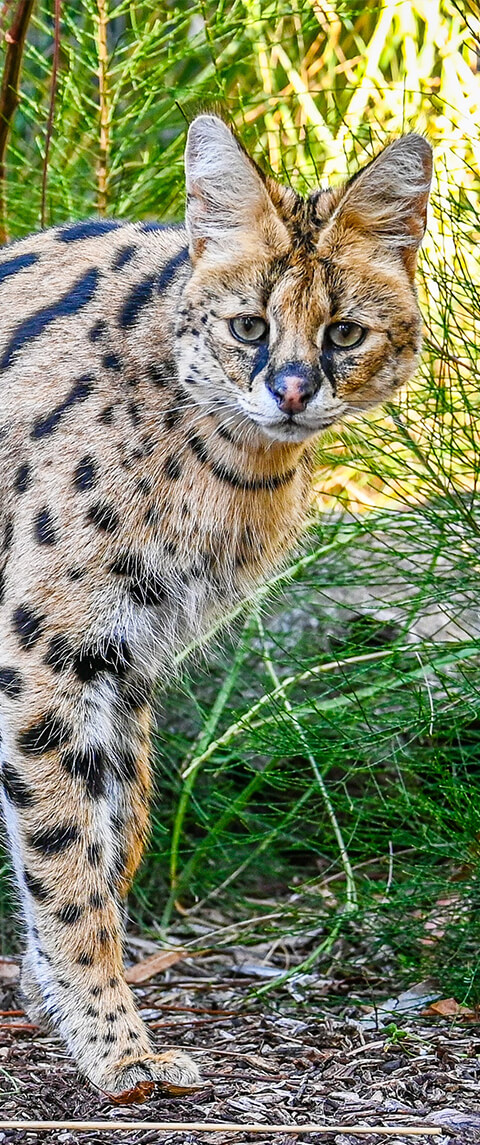
Servals are found throughout the African savannah. They have large ears and an acute sense of hearing which is used to pinpoint prey, even when lurking in long grass. Their long legs allow them to pounce and jump when hunting. They are carnivorous; their diet includes rodents, birds, reptiles, frogs and insects. Servals are solitary animals that communicate primarily through urine spraying and rubbing saliva on objects around them and they also use vocalizations such as shrill cries, growls, and purring. Their enemies include large carnivores such as lions and hyena that will kill adult and young serval if they come into contact. In Africa some tribes use dogs to hunt small game and serval are often an unfortunate by-catch of these hunts. Our serval are part of the regional zoo breeding program for the species.
Tasmanian Devils
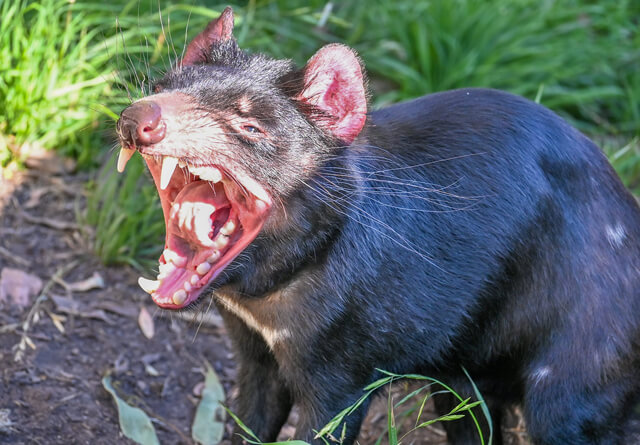
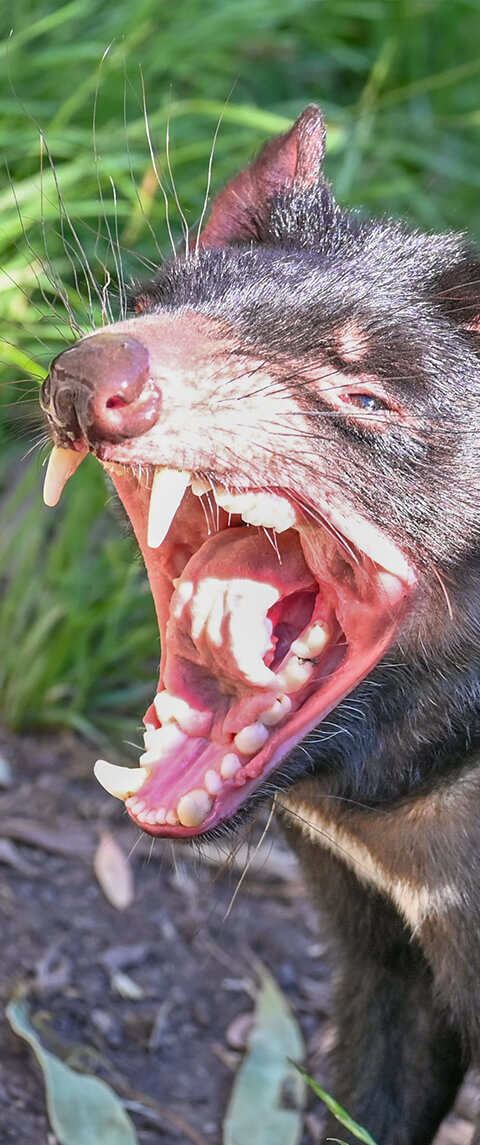
The Tasmanian devil Sarcophilus harrisi is a carnivorous marsupial of the family Dasyuridae. The name Sarcophilus means “Flesh-lover”. It was formerly present across mainland Australia but became extinct there around 3,500 years ago. The size of a small dog, the Tasmanian devil became the largest carnivorous marsupial in the world following the extinction of the thylacine in 1936. It is related to quolls, and distantly related to the thylacine. It is characterised by its stocky and muscular build, black fur, pungent odour, extremely loud and disturbing screech, keen sense of smell, and ferocity when feeding. The Tasmanian devil’s large head and neck allow it to generate among the strongest bites per unit body mass of any extant predatory land mammal. It hunts prey and scavenges on carrion.
Tasmanian devils are threatened by Devil Facial Tumour Disease (DFTD) is the name given to a fatal condition in Tasmanian devils which is characterised by the appearance of obvious facial tumours. The tumours are first noticed in and around the mouth as small lesions or lumps. These develop into large tumours around the face and neck and sometimes even in other parts of the body. Badly affected devils have many tumours throughout the body.
The captive breeding programme consists of animals that have been tested not to carry the virus and consists of approximately 600 animals spread across a variety of captive institutions on the mainland and in Tasmania. Some organisations have created large camps in which devils have been released and are thriving. Captive bred animals have also been released onto offshore islands such as Maria where post release, the population has thrived.
Small-clawed Otters
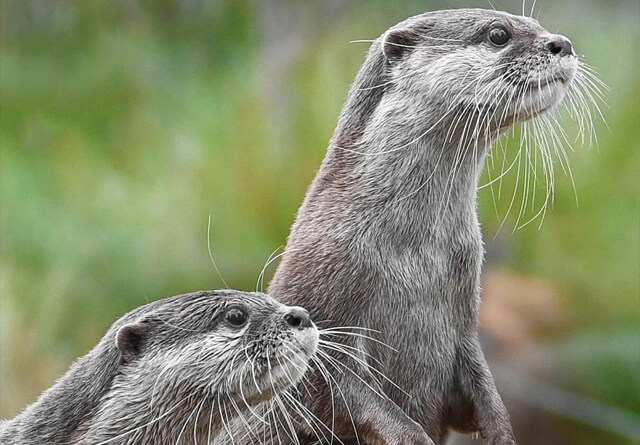
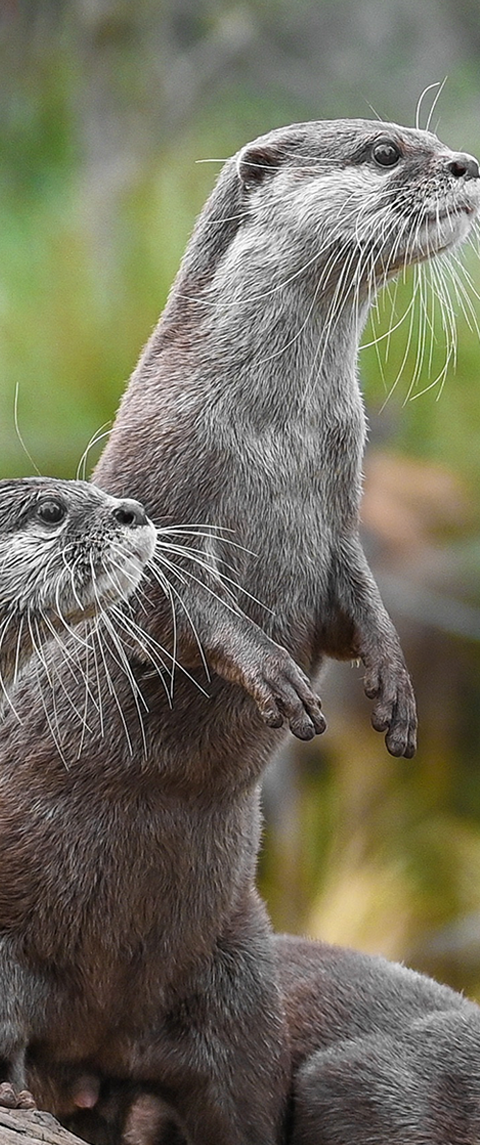
The Asian small-clawed otter, also known as the oriental small-clawed otter and the small-clawed otter, is an otter species native to South and Southeast Asia. It has short claws that do not extend beyond the pads of its webbed digits. They live in riverine habitats, freshwater wetlands and mangrove swamps where the feeds on molluscs, crabs and other small aquatic animals. They live in pairs but also in family groups with up to 12 individuals and are highly vocal with high pitched squeals and whistles they are constantly in contact with others in their group and in the zoo with their keeper who they recognise. When swimming on the surface, otters’ row with the forelimbs and paddle with the hind limbs. When diving under water, they undulate their bodies and tails and swim fast enough to catch fish. Between one and seven pups are born in a litter and kept in a burrow, lined with vegetation for over two and half months. Listed as vulnerable they are impacted by habitat loss, hunting for the fur trade and the illegal pet trade.
Meerkat
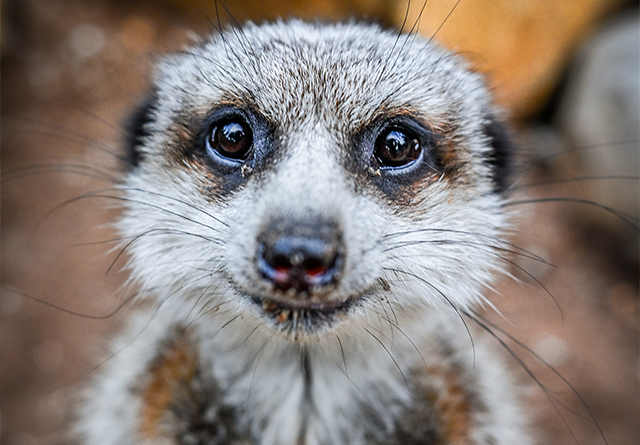
Related to the mongoose family they live in semi-desert habitats and can number up to 30 in a mob, usually it’s a dozen or so. Communication is key while foraging for insects, reptiles and fruits, they constantly “talk” to each other with a dozen or so different sounds used to share information on food and safety matters. A sentry is always on duty, perched high and warns the mob of any danger. They live up to ten years and are mature at two years at which stage young females are often pushed out of the group by the dominant matriarch and move on to form their own group. Their gestation is two and a half months and they give birth to litters of two to six young, borne blind and which spend their first few weeks in the burrow before venturing out where they are always looked after by one of the mob. Natural predators include eagles, snakes and small wild cats.

Tiger Quoll
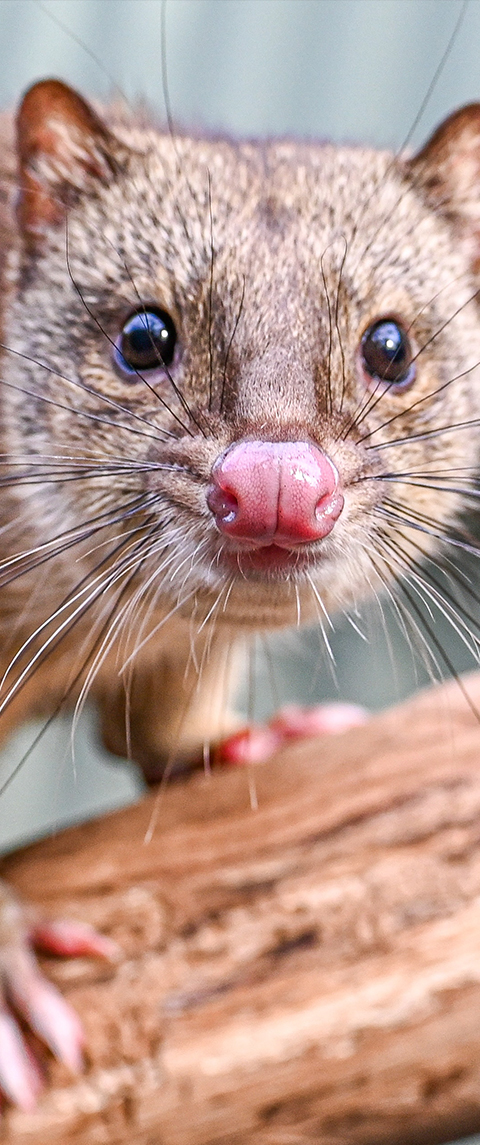
There are four species of quolls. The largest species, also known as tiger quolls, the spotted-tailed quoll is the second largest carnivorous marsupial on the Australia mainland after Tasmanian devils. They live in a variety of habitats, are mainly solitary animals and will make their dens in rock shelters, small caves, hollow logs, and tree hollows and feed on prey such as possums, bandicoots, rabbits, birds, and reptiles.
Quolls have a fascinating breeding cycle – The female calls or “clucks” when she is in oestrus (season) and her neck swells. After a gestation period of 3 weeks, she will give birth to up to thirty young. When spotted-tailed quolls give birth, their offspring are about the size of a grain of rice and up the fur on the mother’s belly and into the pouch where they attach on to a teat. With only 6-7 teats available only that number of young can survive. The mother carries her joeys in her pouch until about 2 ½ months of age at which point, they are left in a nest in the den. The young are then weaned and are independent at 5 months and mature by one year of age. They are short lived with a life expectancy of only up to five years. The joeys grow to about 2 kg for females and 4 kg for males, by the time they reach adulthood.
The spotted-tailed quoll population is seriously threatened throughout mainland Australia. Listed as endangered on the mainland, the introduction of feral animals such as foxes, cats, and dogs, as well as diseases and the logging of their forest habitats, have greatly reduced their numbers. Historic logging of forests and the threat of global warming has for the first time seen many previously very wet forests drying with some even burning.
Several new forest reserves and linkages have been created where the species has been recorded. Feral animals, in particular fox and cat control measures, are being implemented in key habitats. To avoid conflict with people tips on how to “quoll proof” hen houses has been made available. Camera traps and trained scat/scent dogs are being used to detect and monitor populations.
A captive breeding insurance population is managed in Australian wildlife parks and zoos such as ours. Genetics are tightly managed and being relatively short-lived, animals are moved between organisations for breeding on a regular basis.
Our Zoo is one of the top breeding facilities for this species with over forty bred over a twelve-year period.

Follow us @hallsgapzoo
✨️✨️✨️Fast Fact Friday✨️✨️✨️
Let`s learn about Jungle Fowl!
🐓 All domestic Chickens evolved from Jungle Fowl. Like Dogs did from Wolfs.
🐓 Junglefowls are omnivores feeding mainly on seeds, roots, fruits and invertebrates.
🐓 Jungle fowl perform a coutship behaviour known as tidbitting, in which the male will repeatedly pick up and drop food before offering it to the female.
Come down and see how many Jungle Fowl chicks you can spot. Tickets avaliable on our website now.


Merry Christmas to you all, the whole Zoo crew wish you a day filled with laughter, friends and family.
Our keepers have been working as hard as Santa’s elves by creating enrichment to share their favourite holiday traditions with their animals. How many do you recognise? 🎁🎄🍪 What’s your favourite tradition when the season rolls around?
We hope you all have a safe and happy Christmas Day with your loved ones! We will see you back at the Zoo on Boxing Day (open 10am-5pm).
#christmastraditions #animalenrichment #zoofun

Shhh… 🤫
We’ve been keeping a secret… and it’s very good at blending in 👀💚
Keepers are sooo excited to announce that our fossil cave is now home to a Chameleon and a Green Tree Python
You might not spot them straight away but trust us, they’re here and they are stunning 😍 keepers and volunteers have done an incredible job on their enclosures.
Keep your eyes peeled on your next visit✨
#hallsgapzoo #greentreepython #chameleon #newadditions

🎄We will be closed on Christmas🎄
We are open every day all year round 10am - 5pm except for Christmas Day.
Dont worry though, our keepers will still be here making christmas day just as special for our animals too! ✨️🎄🦒
#hallsgapzoo #visitgrampians #visitmelbourne #christmas

✨️✨️✨️Fast Fact Friday ✨️✨️✨️
Learn about Spotted-tailed Quolls!
🐾 Quolls are only the size of a grain of rice when they are born!
🐾 Quolls have the second stongest bite force compared to their body size of all predatory mammals after the tasmanian devil.
🐾 Quolls have quite large home ranges, travelling up to 6 kilometres a single night in search of food.
Can you spot our Spotted-tail Quolls? Give it a go today. Tickets avaliable on our website now!
#spottedtailquoll #dasyurusmaculatus #hallsgapzoo #visitgrampians #visitmelbourne

Will there be someone that chews like this at your Christams Lunch this year?
This is Shardul, thoroughly enjoying his panda mash. Lip smacking is cute, but only when animals do it.
Let us know your favourite Christmas Dish in the comments below ⬇️
#hallsgapzoo #visitgrampians #visitmelbourne #christmas #holidayseason #festiveseason

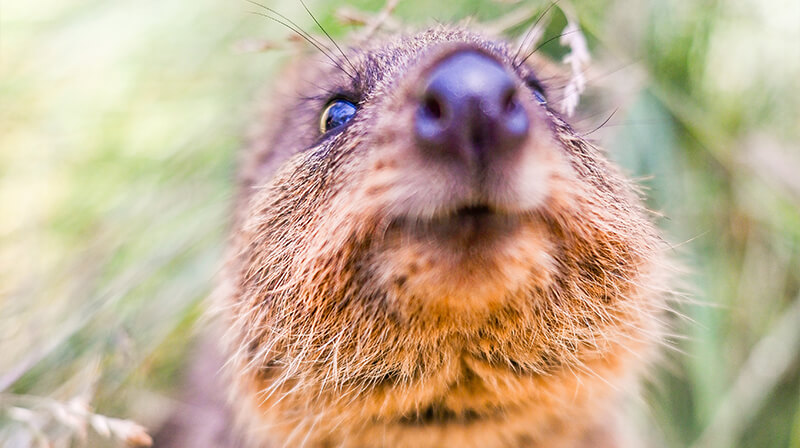
It’s a….Quokka
We are hopping with excitement to introduce Rooster our new male Quokka who has come to us as part of the breeding program.
Stay tuned for cuteness overload as Ember and Rooster start getting to know each other.
#hallsgapzoo #quokka #conservation #schoolholidays

Do you know someone who is obsessed with cheetahs? 🐆
Gift them with the perfect unforgettable experience this holiday season with a Cheetah Encounter. 🎁🎅
Head behind the scenes to get up close and personal with the fastest land animal on earth!
Experience cuteness aggression when you hear a cheetah chirp for the first time.
Book on our website now for an intimate and exclusive experience limited to two people per day on Wednesdays, Thusdays, Saturdays and Sundays.
Check out these absolutely stunning shots captured by Keeper Darci 🤩🤩
#hallsgapzoo #visitgrampians #visitmelbourne #cheetah #cheetahencounter

We think Zuri is the Cutest Cat out there! Here are some of our favourite photos of her. 😻🫶
Who is your favourite animal at the zoo? Share your best pics in the comments below and tell us why!! ⬇️⬇️
#hallsgapzoo #serval #leptailurusserval #visitgrampians #visitmelbourne

✨️✨️✨️Fast Fact Friday✨️✨️✨️
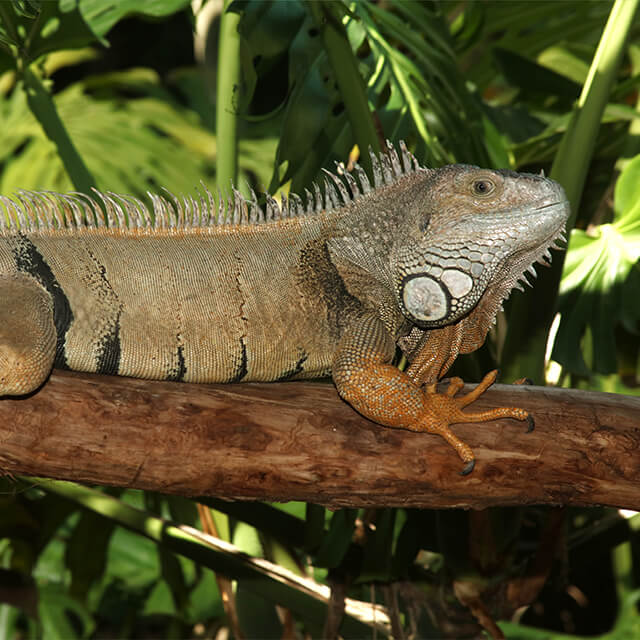
Todays Fast Fact Friday is all about Green Iguanas!
🦎 Green Iguanas can voluntarily drop their tails in order to escape predators. This is known as caudual autonomy.
🦎 Green Iguanas are able to leap down from trees that are 15 meters tall without injury! Their bodys are built to absorb the shock, utilising their back legs to grab onto tree branches to lessen the fall.
🦎 Green Iguanas will extend the flap of skin underneath their chin, known as a dulap, as a form of non-verbal communication. Their dulap is used to thermoregulate, ward off predators and to impress the ladies.
Come down today to meet Shrek, our resident Green Iguana, in person. Book your tickets on our website now!
#greeniguana #iguanaiguana #hallsgapzoo #visitgrampians #visitmelbourne

The Festive Season is all about Family. Make some special memories this holidays here at Halls Gap Zoo. 👨👩👧👦👪👩👦
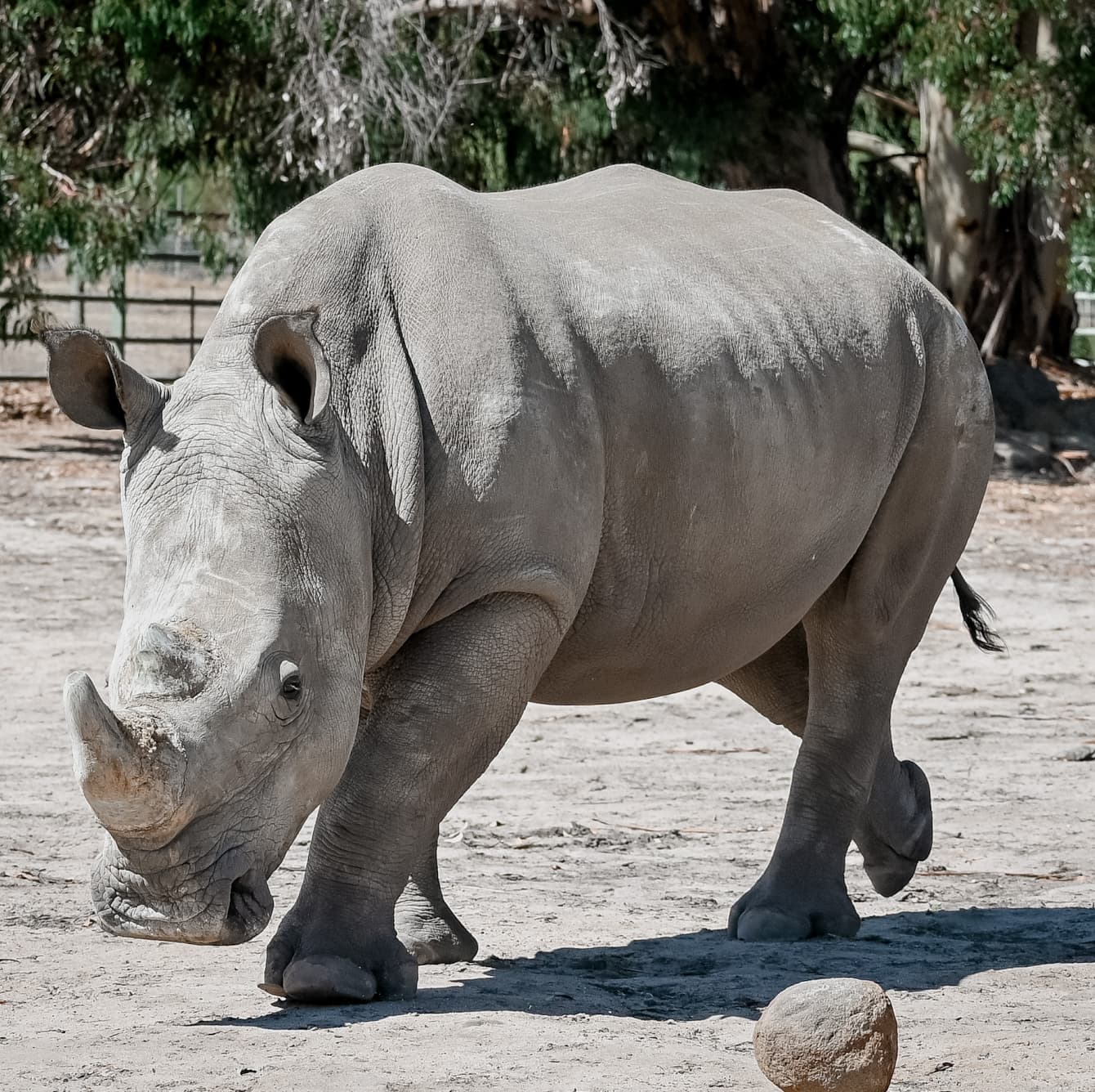
Explore our magical property set in the heart of the Grampians National Park where you will see many wild native species as well as over 120 different species from all around the world, ranging from our largest, the Southern White Rhino, to our smallest, Australia`s own Green Tree Frog. 🎄🎁🎅
Go to our Website to book your Tickets Now!
#hallsgapzoo #visitgrampians #visitmelbourne #christmas #holidayseason #festiveseason


✨️✨️✨️Fast Fact Friday ✨️✨️✨️
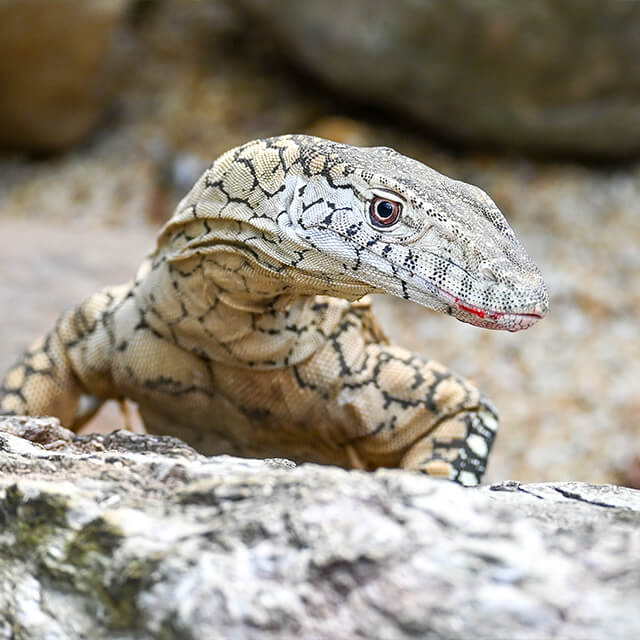
Let`s learn about Lace Monitors!
🦎 Lace monitors are the second largest lizard in Australia after the Perentie.
🦎 Lace monitors come in 2 different colour forms; standard and bells phase. Bells phase lace monitors have thick yellow and black bands.
🦎 Lace monitors lay their eggs inside termite mounds. This helps to incubate the eggs before the mother comes back to dig them up when they hatch.
Did you know that all monitors in the world are related! They are all in the same genus, Varanus. Check out three different iconic Australian Monitors here at the Zoo, the Lace Monitor, the Heath Monitor and the Largest Monitor in Australia, the Perentie!
Go to our Website to book your tickets Now!
#lacemonitor #varanusvarius #hallsgapzoo #visitgrampians #visitmelbourne

‼️Volunteer Applications Open‼️
We are looking for some passionate and enthusiastic volunteers to join the team here at Halls Gap Zoo! 🦒🦦🦘🦅🐍
Gain hands-on experience and learn from our dedicated keepers across all rounds at the Zoo (+ cuddle some cute critters)
We can`t thank our volunteers enough for all of the hard work that they do. It really makes a difference for both our keepers and animals. 🫶
We have only a few limited spots available! 18+ only.
Go to the Volunteer section on our Website to Apply Now!
#hallsgapzoo #volunteer

Did anyone tell you it’s almost December 🙀🎄🎅
Buy the kids something they’ll really remember….
Voucher available online https://hallsgapzoo.com.au/shop/gift-voucher/
#hallsgapzoo #visitmelbourne #visitgrampians


Our keepers work hard to keep our exhibits well maintained.
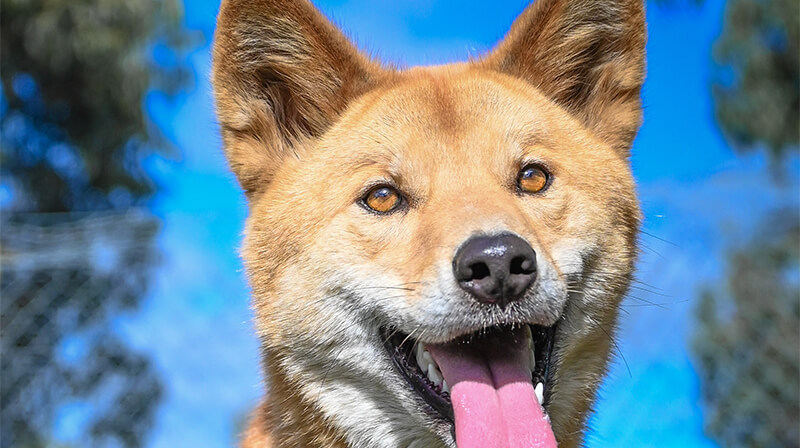
You, our visitors aren’t the only ones that enjoy them. Daku, one of our three male dingoes loves the smell of freshly mowed grass. 🍀🍂
Learn more about dingoes and their unique personalities in a Dingo Encounter. Head over to our website now to book your Encounter!
#hallsgapzoo #dingo #visitgrampians #visitmelbourne

You guys asked for it and here it is- a toy version of Pumba our Scottish highland bull and it’s already stealing hearts 💕
Even though Pumba is a big strong boy and we thought he would love it turns out there’s only room for one Pumba at the zoo but that’s ok this soft, squishy and full of charm replica is the perfect cuddle buddy for all cattle lovers out there.
Grab yours before they all wonder off the shelf! #hallsgapzoo #scottishhighland #grampians

FAST FACT FRIDAY
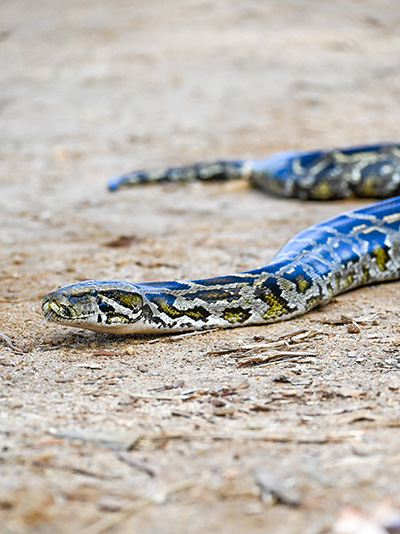
Burmese pythons:
🐍 They can get up to 5m long and over 75kg
🐍 They are great swimmers and can stay underwater for up to 30 minutes
🐍 Being pythons they do not have venom and will kill their prey by constricting them.
We have 2 Burmese Pythons here at Halls Gap Zoo and in the summer months you may be lucky enough to see us take Doug out for a walk and truly get an appreciation for his size even though he is only a tiny 35kg he still takes at least 3 keepers to carry him.
#hallsgapzoo #burmesepython

📢 Early Closure Notice
We are closing early today for staff training to help our team continue providing the best possible service to you.
The Zoo will be open from 10am until 4.15pm on the 12th November.
We will reopen at our regular hours tomorrow. Thank you for your understanding and continued support!

Treat yourself with a magical experience up close and personal with our Otters here at Halls Gap Zoo!
Tong feed our girls their lunch and learn from our experienced carnivore keepers during an Otter Encounter. If you’re lucky enough you might get the chance to hold their hands, they’re softer than you can imagine!
Book now at: https://hallsgapzoo.com.au/shop/otter-encounter/
#hallsgapzoo #otter #otterencounter #visitmelbourne #visitgrampians

A reminder that we are OPEN 10am-5pm everyday except Christmas Day.
If you are looking for a fun day out, we have animal encounters, keeper talks and our food van is open today.
See you all soon
#hallsgapzoo #zoo #grampians #publicholiday

👻🎃 Don’t let those sweet faces fool you… Our Otters have a spooky side! 😱🦦
When the lights go down, they turn into tiny water goblins sneaking, splashing and plotting their next fright for keepers!
Are they cute? Always.
Are they spooky? For keepers walking into work…everyday but for guests just enough for Halloween. 🎃
Happy Halloween from our hauntingly adorable otters!
#hallsgapzoo #halloween #booatthezoo

🌧️ Rainy Days at the Zoo 🌧️
While the rain might send most people indoors life at the zoo carries on but we are just a little soggier! ☔
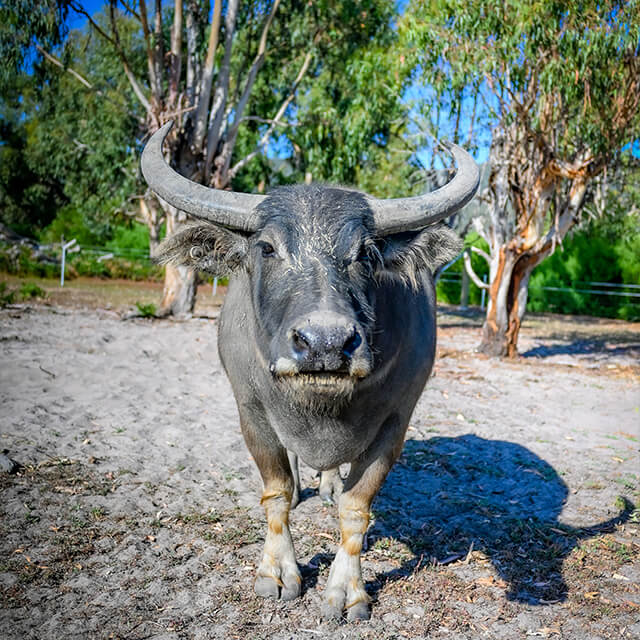
Some of our animals actually enjoy a good drizzle eg. The Water Buffalo make sure the job gets done properly while others enjoy it from the comfort of their shelter.
For the zookeepers, rainy days mean a bit more mud on the boots and suddenly everyone needs to read SOP’s 🤪
They make sure everyone stays cozy and well fed and that all the shelters are snug and dry.
So even when the rain pours, there’s always plenty of life and laughter behind the scenes at the zoo!

Spring is well under way here at the Zoo with so many new cute little faces!
Pack yourself a lunch and come and enjoy the weather. See how many babies you can spot. How cute are these baby Chinese Geese Goslings and Jungle Fowl Chicks!
#hallsgapzoo #chinesegeese #junglefowl #visitgrampians #visitmelbourne #babyanimals

It’s official, the votes are in!
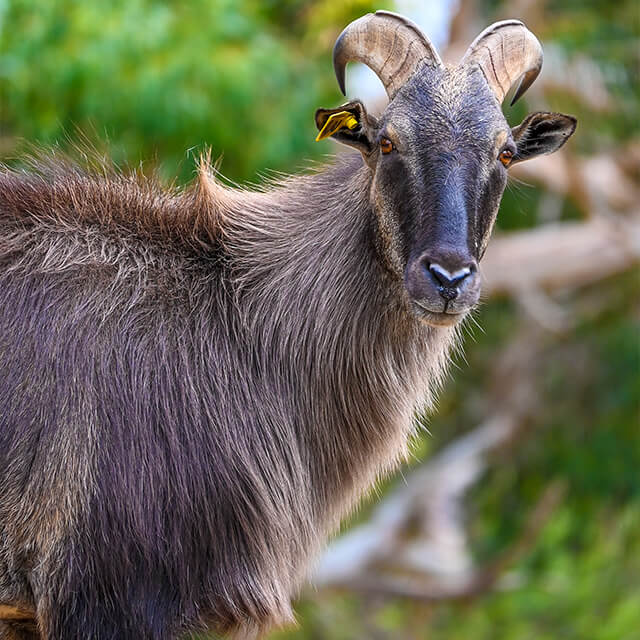
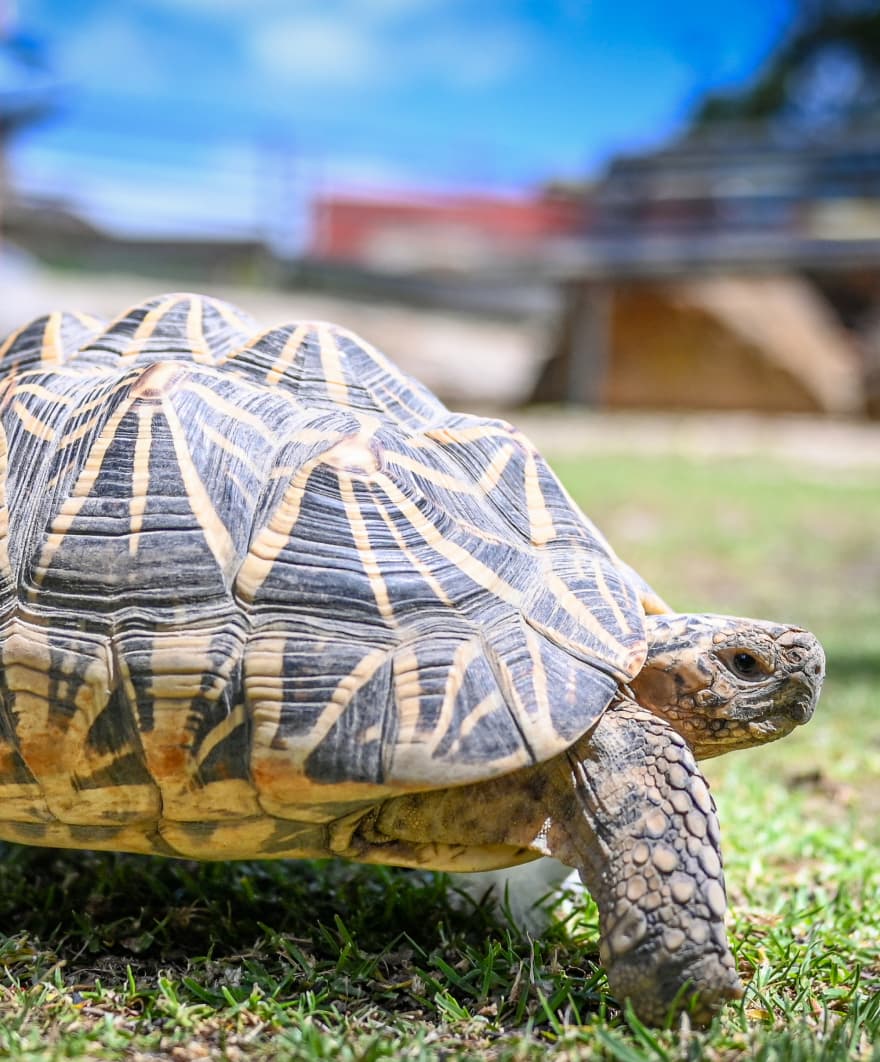
After much deliberation, we have agreed on the names for our new baby Indian Star Tortoises and Himalayan Tahr…
We’d like to thank everyone who commented on our recent facebook posts and joined in during the baby shower, we have loved all the suggestions.
We are delighted to introduce you to Terrance, Jharal and Marcous our Himalayan Tahr and Tortellini, Voldertort and Speedy our Indian Star Tortoises
#hallsgapzoo #startortoise #tahr #grampians

Thankyou everyone who put in suggestions to name our 3 new Star Tortoises 🌟
All our keepers are now voting and we will let you know the results soon.
#hallsgapzoo #startortoise #schoolholidayfun

🪶 Ok… who blinked and let these guys grow up so quick?! 👀
Our baby emus aren’t so little anymore and we can’t believe how fast they’ve grown, come and see them these school holidays before they loose their adorable stripes and if your lucky enough they may even come over for some food (food available at the front desk).
📸 Keeper Caroline
#hallsgapzoo #babyemus #schoolholidays #Grampians

🐾🎉 It’s International Red Panda Day and what better way to celebrate than by booking an encounter to meet one our very own dynamic duo!
With fluffy tails, little paws, and endless charm, our Red Pandas are ready to steal your heart (and maybe a snack or two). 🌟💕
Trust us when we say this is one encounter you will not forget.
#hallsgapzoo #encounter #redpanda #schoolholidays #experiences

Beautiful spring day the animals are loving the morning sun.

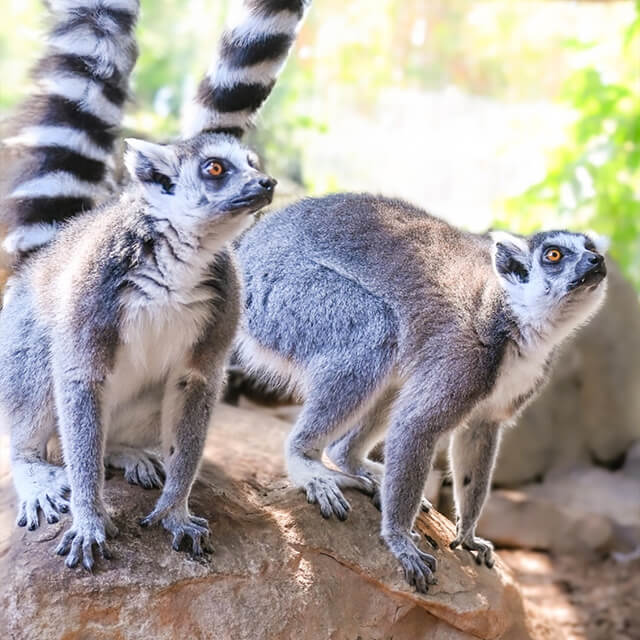
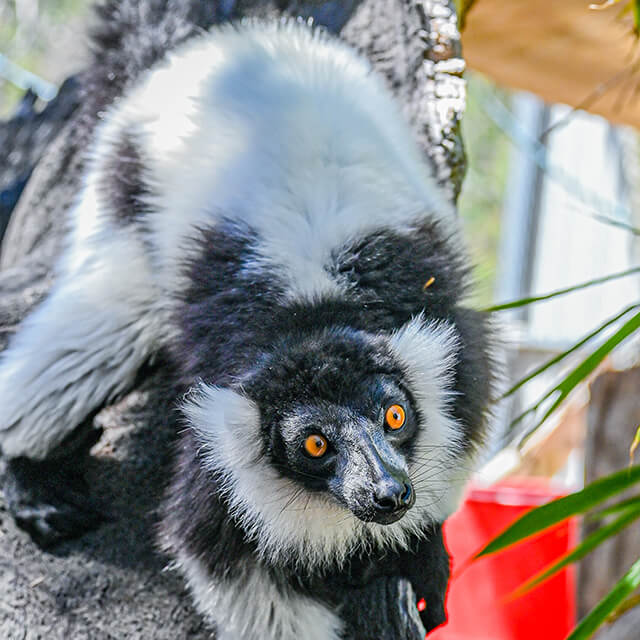
If your friend chews this loud, it’s annoying… but when a lemur does it, it’s the cutest thing ever. 💕🙊 #hallsgapzoo #lemur

Say hello to our newest additions.
We recently welcomed 3 new young Tahr who have settled in well with our 2 older boys. Aren’t they just adorable? 🥰
They are still yet to be named so if you have a suggestion leave a comment below 👇
#hallsgapzoo #tahr #newanimals

🌧️ Father’s Day is almost here! While the forecast is looking a little gloomy for Sunday, why not make the most of the sunshine beforehand and plan your visit for Saturday? ☀️🐾
Bring Dad along for an adventure at the zoo this weekend it’s the perfect way to spend quality time together before the weather turns.
And if you’re still looking for the ultimate gift, our animal encounters make an unforgettable present that Dad will never forget. 🦏🦒🐆🐍
🎟️ Book your encounters now and give Dad a wild experience this Father’s Day!
#hallsgapzoo #fathersday #familyday #encounter #presentfordad

How amazing is it that we get to inspire the next generation of zookeepers, it is a good reminder that the love for animals and conservation starts early.
Don’t they look the part all dressed up for book week at school 🥰
Check out our Zoo Keeper for a day program to see what a day looks like for our Zookeepers and get up close to a range of different species.
#minikeepers #hallsgapzoo

🐾 Ever wondered what it’s really like to be a zookeeper? 🦓🦒🐒
Now’s your chance!
Drop your questions for our amazing zookeepers in the comments below ⬇️
They’ll be answering everything from fun animal facts to what a day in the life of a keeper looks like.
What have you always wanted to know?
We will video our keepers answering your questions and post it in the coming weeks.

Nothing but sunshine all weekend long ☀️
Now is the time to get to the zoo and see the adorable Emu chicks before they grow any bigger (it happens way too fast).
#hallsgapzoo #emubabies #grampians

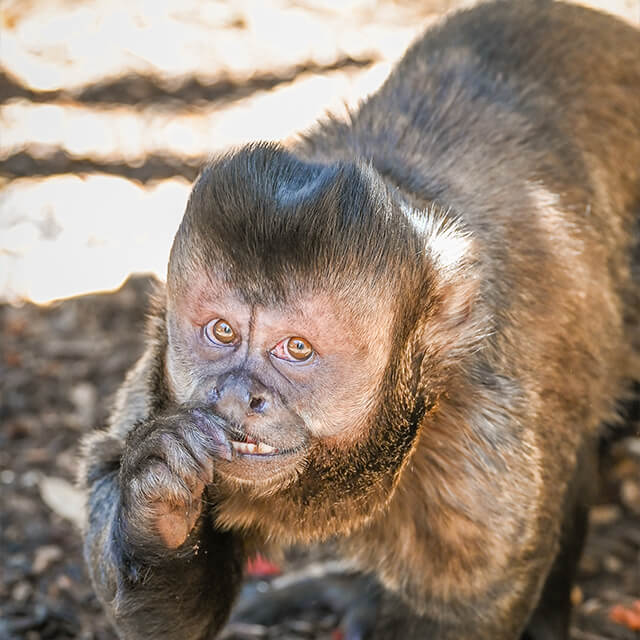
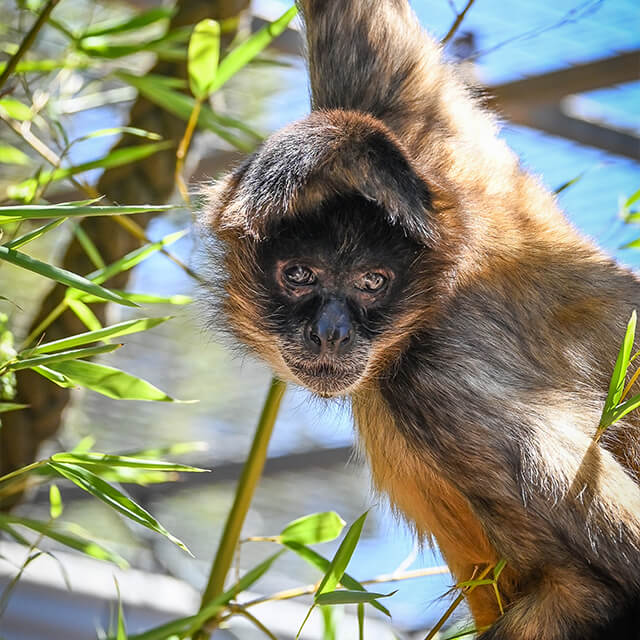
Polo puts the cheeky into cheeky monkey 🙈 #hallsgapzoo #capuchin

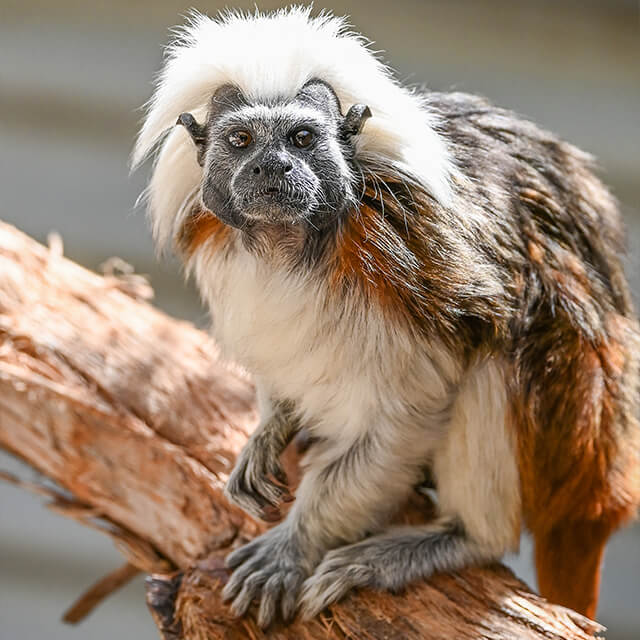
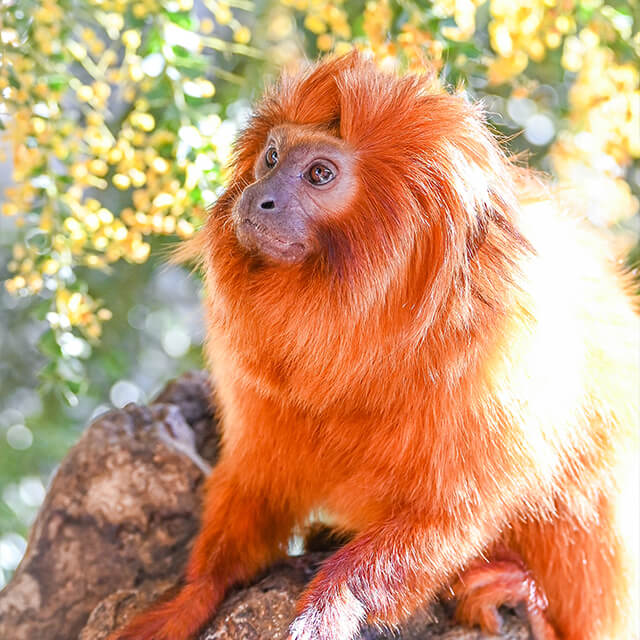
It’s International Golden Lion Tamarin day 🎉
Today we celebrate such amazing creatures that we are so lucky to be able to work with.
#hallsgapzoo #goldenliontamarin #internationalgoldenliontamarinday

✨✨✨FAST FACT FRIDAY✨✨✨
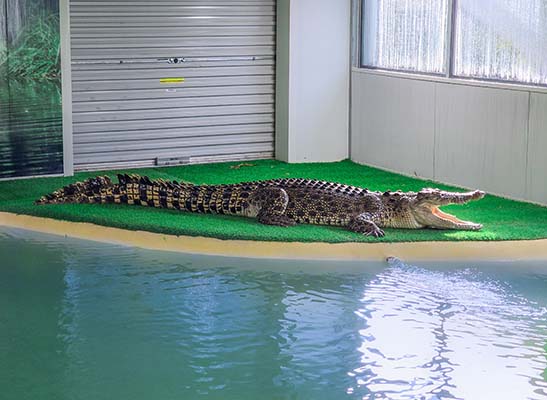
🐊Saltwater crocodiles can grow up to 7m in length and weigh over 1,000kg 😱
🐊These guys are ambush predators and will patiently wait for the right time to strike they can hold their breath for hours underwater.
🐊Only 1% of hatchlings will make it to adulthood
Remember to be crocwise when in croc country
#hallsgapzoo #saltwatercrocs #becrocwise

How good was that rain?? Our dams are actual dams and no longer holes in the ground BUT this weekend is looking to be nothing but gorgeous winter sunshine 🌞 the animals are sure to be out and about sunning themselves so pop in and say hello maybe even book that encounter you’ve been wanting to do and enjoy spending the day out of the house as we all know that sunshine + animals= The perfect day
Book now via our website (link in our bio)
#hallsgapzoo #encounters #grampians

Everything’s better when we’re together 💜
#hallsgap #hallsgapzoo #visitvic

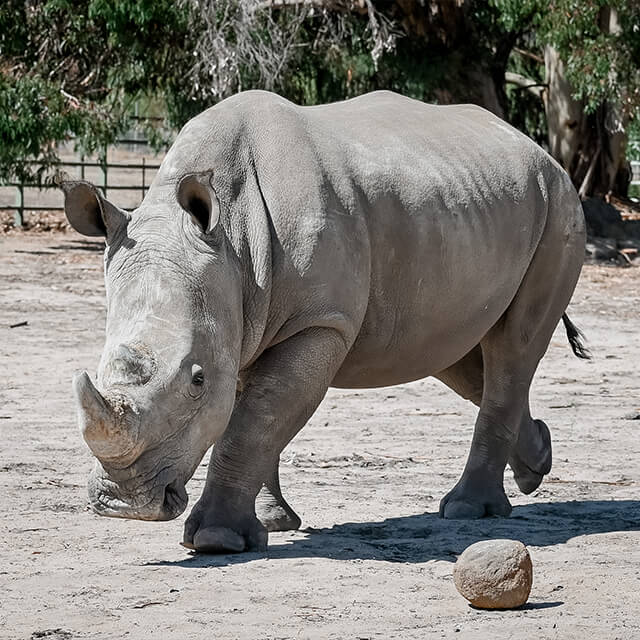
Kingston clearly isn’t paying the hay bills 🤑🤑
He sure does love a good hay hat and I have to say we think he looks quite handsome.
#hay #rhino #visitmelbourne #encounter

✨✨✨FAST FACT FRIDAY✨✨✨
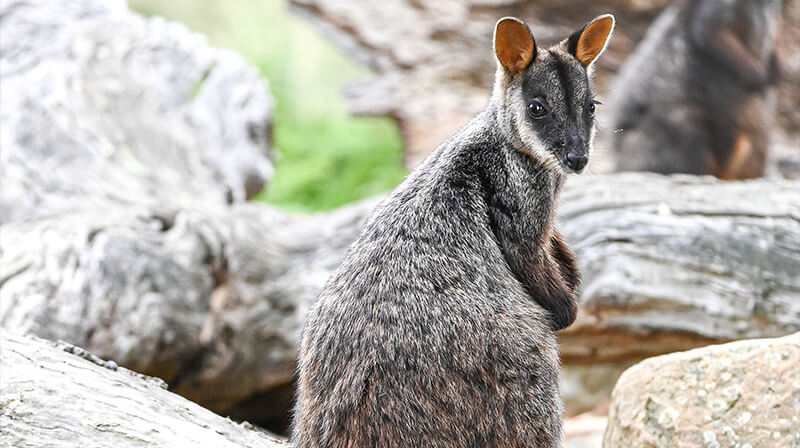
Brush Tailed Rock Wallaby:
🦘 As the name would suggest, these wallabies live in shrubbed areas close to rocks and cliffs, which they will escape to when hiding from predators.
🦘The southern brush-tailed rock wallaby is critically endangered. Victoria has roughly 50 individuals left in the wild. In 2008 a few individuals were reintroduced back into the wild in the Grampians National Park and are closely monitored.
🦘Brush-tailed rock wallabies live in groups with one male and many females. When a male joey is born, it will live with the group until maturity and then disperse to find a new group.
We have 10 Brush Tailed Rock Wallabies here at Halls Gap Zoo and they are amazing at hiding in their rocky habitat try to spot them all next time you are visiting.

Just a reminder that our food van is open everyday of the school holidays from 10am-2pm, grab your coffee or hot chocolate to sip on and keep you warm on these winter days as you walk around the zoo.
#coffee #schoolholidays #zoo #animals #encounters #grampians #glowfestival
